God’s Strength: Paper Challenge

This idea was inspired by something I read in a great book by Heno Head Jr: Simple Science Object Talks. I would totally recommend the book as it has some amazing ideas to help children to connect with God and to explore the meaning of Bible stories.  I’ve used this activity in primary school assemblies but it would work just as well in an all age service or in a children’s group.
IMG_3272

You will need: I sheet of A4 paper per child, sellotape, toilet roll tubes or kitchen towel tubes, mugs or books.

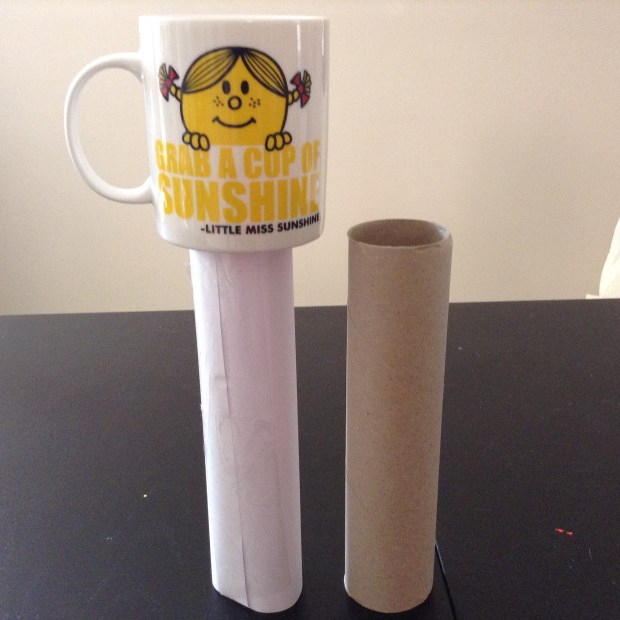
Challenge children to use 1 sheet of paper to make a construction that will hold the mug or book off the floor. DO NOT show them the tubes!

Invariably, the children will find this an impossible task!

Now take a sheet of A4 paper and bring out the paper towel tube.  Wrap the paper tightly around the tube and sellotape the edges to make a paper tube covering the card tube.

Show how the mug will balance happily on the tube, but admit to the fact that you are cheating because you used tube and you didn’t let the children use one!

Now take the paper tube carefully off the card tube and ask if the children think that the paper on its own will hold the mug.  They will probably say no.  Put the mug on top and it will balance.

Talk to the children about the fact that when things are hard and we try to do it by ourselves, sometimes we don’t get far and things seem to collapse around us. When we ask for help, we can do things we never thought possible.  Think about the verse from Philippians 4: 13 “I can do all things through Christ who gives me strength.” As Christians, we can ask Jesus to help us and nothing is impossible to him.  Share times when you have asked Jesus for help and pray for people who are faced with difficult situations.
4 Lego prayer ideas

Most families have some Lego lurking somewhere and it is a fantastic tool for praying with, especially is you are looking for hands on, colourful prayer.

Here are some ideas for praying with Lego…

Have fun!

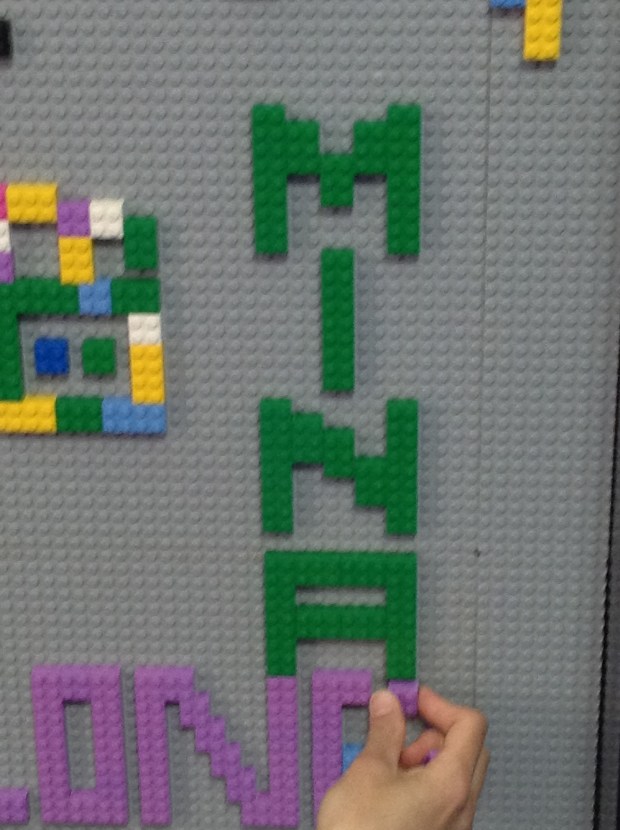
  1. Use lego to spell the names of people you are praying for (or the initial letter of their name if it is a long name!) Ask God to bless that person.

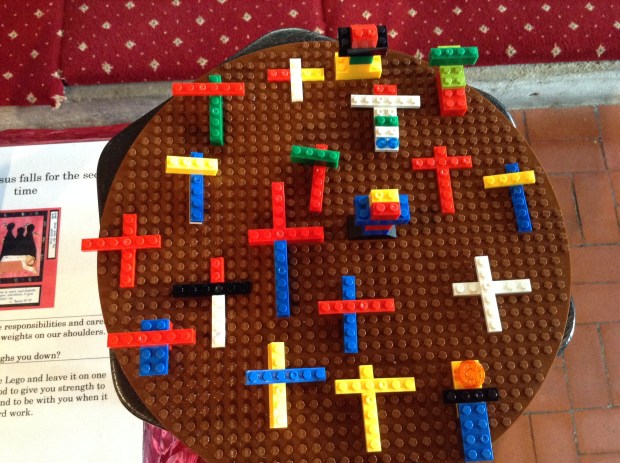
IMG_31952.  Say sorry to God for something you have done wrong and ask Him to forgive you. Make a cross with some Lego pieces as a reminder that because of the cross and the resurrection, we have the chance at a new start too.
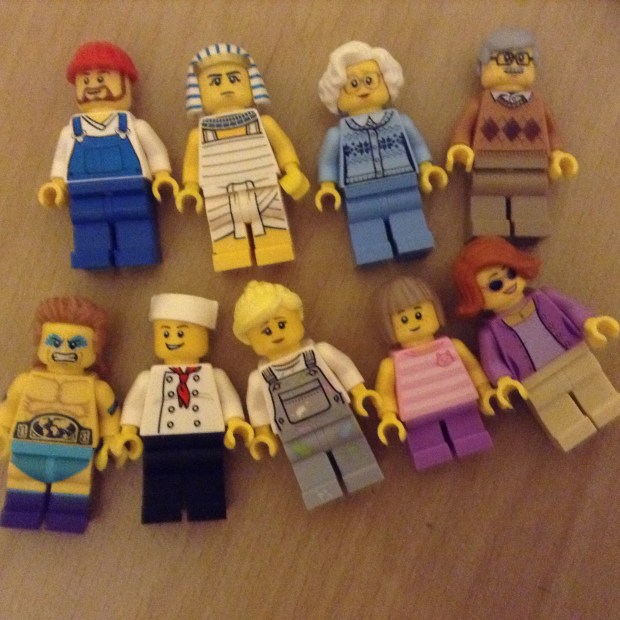
IMG_31693.  Use Lego figures to pray for people.  If you pick up a girl- pray for a female, if it’s a boy, pray for a male, if it’s a figure that has a particular job e.g. a construction worker or an artist, pray for people doing that job.  If you pick up a figure with an angry expression, pray for people who are angry and need peace.  Let your imagination to think of other  ways of using the figures to pray!
IMG_3269

4.  Make models with Lego of things you’d like to say thank you to God for.


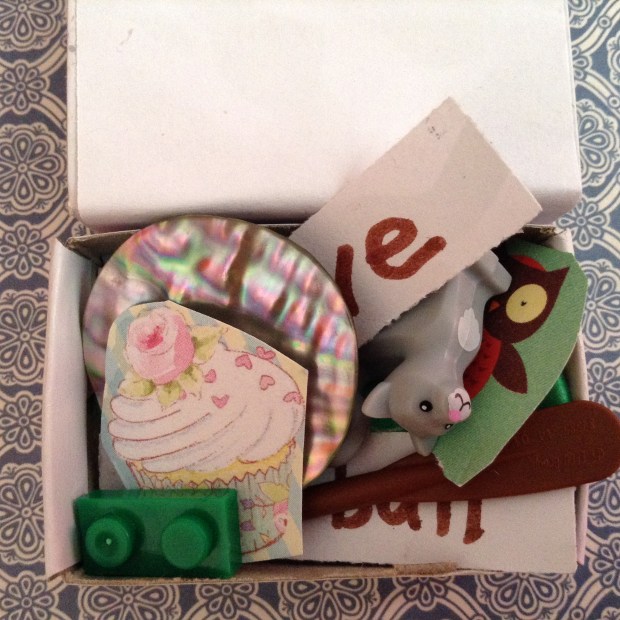
God knows me matchbox craft

Very often there are stories in the Bible where people do things that completely exceed expectations.  Samuel hears the word of God, even when he is a young child; David kills Goliath when he is only a boy; Jesus teaches in the temple when he is a boy.  Children are often used by God in ways that adults would never expect and this should be a great encouragement to our own children!  However young they are and however small they seem, God knows who they are, sees their potential and can use them to build his kingdom.

IMG_3233

This craft helps children to think about the fact that they are known by God and each one of them has individual talents and gifts that, perhaps, only He and they know about.  A reading of Psalm 139 might also help to put this idea into perspective.  God knows them on the inside- no matter what they seem to others on the outside!

You will need: a matchbox for every child, paper, scissors, pens, sequins, glue, small items to go inside the box (the children could search for these and bring them with them or add them to the box later).

What to do: Keeping the outside of the box plain (with perhaps the child’s name on it), ask the children to decorate and fill the inside of the box to reflect their personality- they might want to draw and cut out pictures of things they like or are good at, or fill the box with keepsakes that mean a lot to who they are.  When closed, the box will look small and insignificant but, when opened up, everyone will see details of what God knows about who that person has been created to be.

Talk about: gifts God has given us, things in our lives we would like to thank God for, things about our friends that we would like to thank God for.

Pray: ask children to close their boxes and to swap them around so that each person is holding someone else’s box.  Ask each child to thank God for the person to whom the box belongs and to ask him to bless and use that person to help and bless others.

Last Supper Easy Flat Bread Recipe

Children generally seem to love cooking activities and this is a recipe that lets them early get hands on!

As we build up to Easter, you might be thinking of a new way to explore the story of the last supper with your children.  Making flat bread is a great way to really get into the story!

IMG_3120

Explain to the children that Jesus and his disciples were celebrating passover so the bread they used at the last supper would in all probability be the unleavened bread Jews ate at the passover meal.  The bread is unleavened because at the original Passover, the Israelites had to be ready to move quickly and didn’t have time to make bread with yeast.

You will Need: 175g plain flour, 100ml water,2 tablespoons oil, a pinch of salt, baking tray, greaseproof paper (enough for 6 portions)

Pre heat the oven to 180°C.

Mix together the flour, salt, water and oil until a dough is formed.  You may need to add a little more flour if the dough is too wet to handle.

On a floured surface, take turns in kneading the dough over a period of about 5 minutes and then separate the dough into 6 pieces.

Place dough on a baking tray lined with greaseproof paper and bake for 15- 20 minutes.  Take the bread out of the oven and leave to cool.

When cooled, use the bread to act out the last supper and get the children to reflect on how the story makes them feel and what questions it makes them ask.

Psalm 23: Cups Running Over Craft

This craft was incredibly popular at our most recent Messy Church and is a great way to help children tithing about the image in Psalm 23 of God’s provision and an overflowing cup.

You will need: Clear plastic cups, white vinegar, food colouring, bicarbonate of soda

img_3019 Put some vinegar in a cup (about 1/3 full) and add some food colouring to it.  Add a heaped teaspoon of bicarbonate of soda to the vinegar and watch the liquid bubble up and then overflow.

Talk: Ask children- where do you need help most in your life? Who helps you and gives you the things you need? Who makes you feel special and like you belong? How do they do that? Have you ever asked God to hep you with things you need?

Pray: Ask children to think of an area of their life where they would like God to help them. Pray as you add the bicarbonate of soda that he will bless that area!

5 Ideas for Reflective Prayer

It’s always amazing to see the depth of spirituality children display when we give them freedom and encouragement to explore. Just as some adults prefer to connect with God in quiet contemplation, the same is true with some children and we underestimate them at our peril!  Here are some ways I’ve found useful to help children to reflect on God and to be with Him in silence and contemplation.

Each of the activities below allows children to speak to God, but also, as they are doing so, to listen for His voice.  After doing one of these activities, it might be helpful to ask them if they felt God was saying anything to them or if anything popped into their head while they were praying.  Be ready to be astounded!

Sand art reflection  

You will need: slightly damp sand, a tray, a lolly stick, pencil or finger!

Fill the tray with the sand and smooth out the surface. Ask children to spend time writing or drawing their prayers to God in the sand.  What do they want Him to know? What would they like to tell Him?

Letters to God

You will need: envelopes, paper, pens, a letter box

Ask children to write letters to God.  What questions do they want to ask Him? What do they want to say to Him? Do they want to thank Him for anything? Put the letters into envelopes and encourage children to address the envelopes and put them into the box.

Reflective colouring

You will need: Reflective colouring sheets or prayers or Bible verses.  Click here to print some off, pens and colouring pencils

Let children colour in silence.  As they colour, do any of the words or phrases stand out to them? Do they feel God saying anything to them? Do they have any questions for God?

Play dough reflections

You will need: Play dough, a wipeable surface

Encourage children to use the play dough to express their ideas about God: What might He look like? What words describe Him? What other signs and symbols reflect who He is?

Reflection bottles

You will need: Clear plastic bottles, water, oil, food colouring, glitter

Glitter bottle: fill a bottle with water and add a tablespoon of glitter,  seal and shake.

Oil Bottle: Fill the bottle 2/3 full of water.  Add some food colouring to colour the water.  Fill the rest of the bottle with vegetable oil or baby oil.  Seal and shake.

Watch the glitter or the oil mix with the water and then gradually settle. Use the time to focus on God and to listen for his voice.